

Ticketing Solution Detailed Design
Version: v2.0-beta
Updated: 2026-01-05
Status: Preview
1. System Overview and Design Philosophy
1.1 System Positioning
This system is an AI-driven intelligent ticket management platform built on the NocoBase low-code platform. The core goal is:
1.2 Design Philosophy
Philosophy One: T-Shaped Data Architecture
What is T-Shaped Architecture?
Inspired by the "T-shaped talent" concept — horizontal breadth + vertical depth:
- Horizontal (Main Table): Universal capabilities covering all business types — ticket number, status, assignee, SLA and other core fields
- Vertical (Extension Tables): Specialized fields for specific business types — equipment repair has serial numbers, complaints have compensation plans
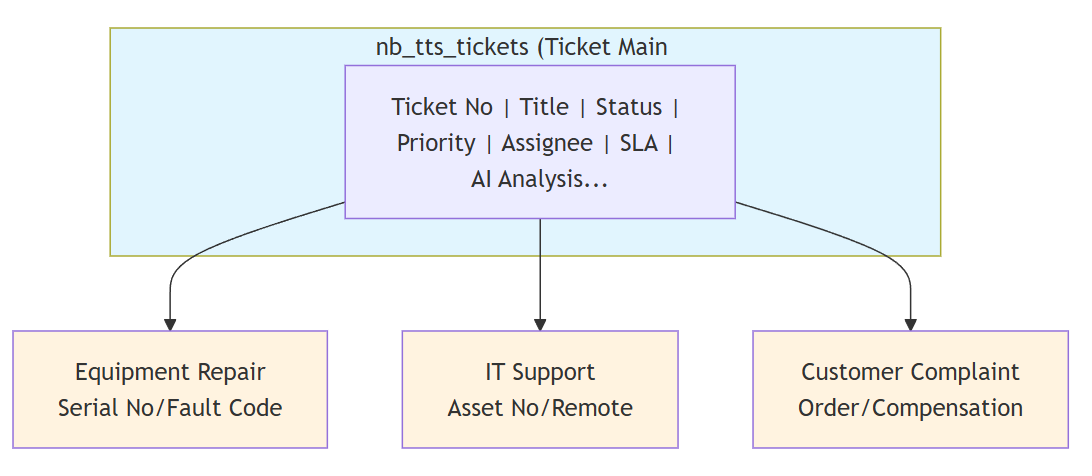
Why This Design?
Philosophy Two: AI Employee Team
Not "AI features", but "AI employees". Each AI has a clear role, personality, and responsibilities:
Why the "AI Employee" Model?
- Clear Responsibilities: Sam handles routing, Grace handles replies, no confusion
- Easy to Understand: Saying "Let Sam analyze this" is friendlier than "Call the classification API"
- Extensible: Adding new AI capabilities = hiring new employees
Philosophy Three: Knowledge Self-Circulation

This forms a Knowledge Accumulation - Knowledge Application closed loop.
2. Core Entities and Data Model
2.1 Entity Relationship Overview
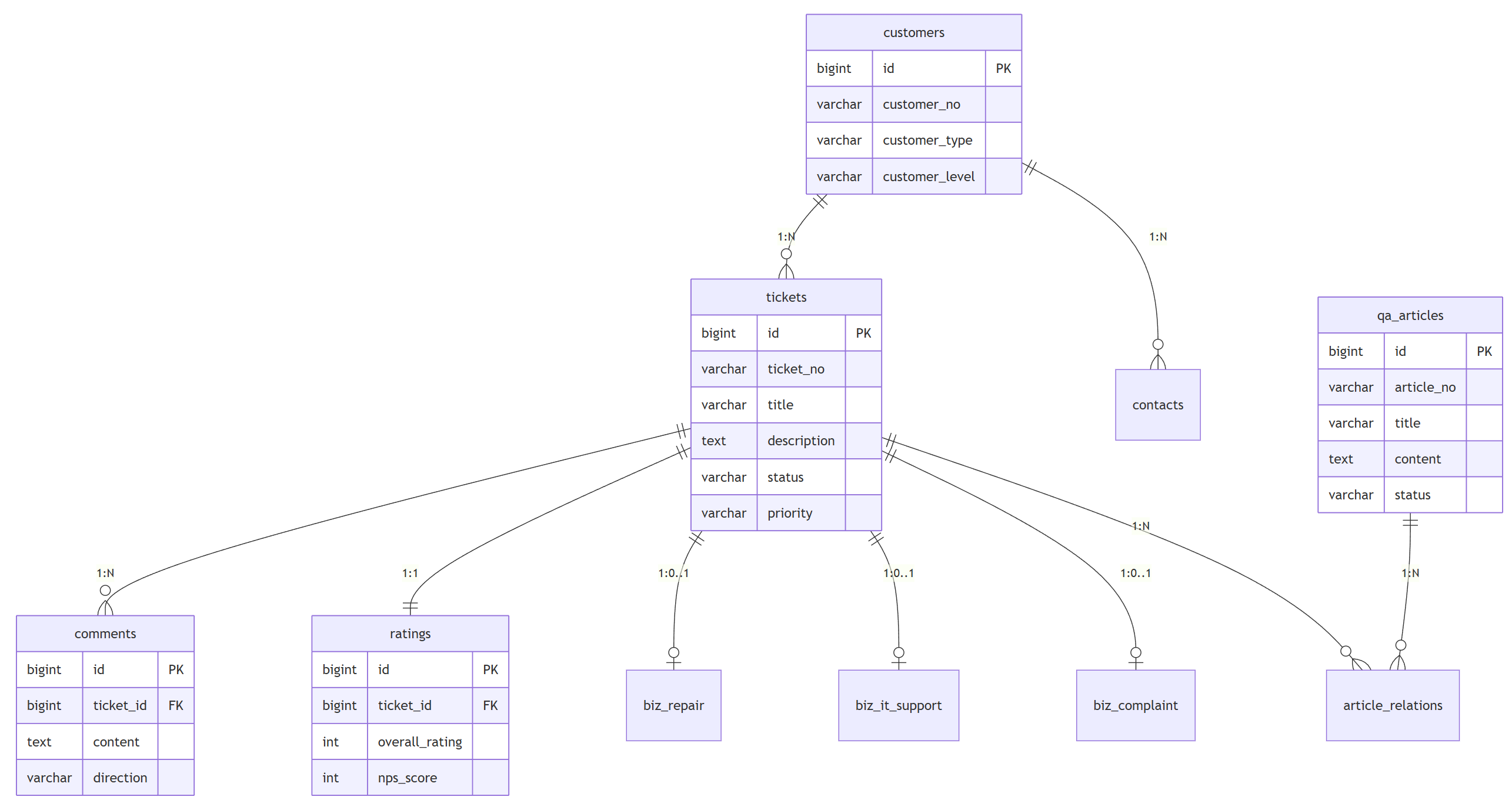
2.2 Core Table Details
2.2.1 Ticket Main Table (nb_tts_tickets)
This is the core of the system, using a "wide table" design with all commonly used fields in the main table.
Basic Information
Source Tracking
Contact Information
Assignee Information
Time Nodes
SLA Related
AI Analysis Results
Multi-Language Support
2.2.2 Business Extension Tables
Equipment Repair (nb_tts_biz_repair)
IT Support (nb_tts_biz_it_support)
Customer Complaint (nb_tts_biz_complaint)
2.2.3 Comments Table (nb_tts_ticket_comments)
Core Fields
AI Review Fields (for outbound)
2.2.4 Ratings Table (nb_tts_ratings)
2.2.5 Knowledge Articles Table (nb_tts_qa_articles)
2.3 Data Table List
3. Ticket Lifecycle
3.1 Status Definitions
3.2 Status Flow Diagram
Main Flow (Left to Right)

Branch Flows


Complete State Machine
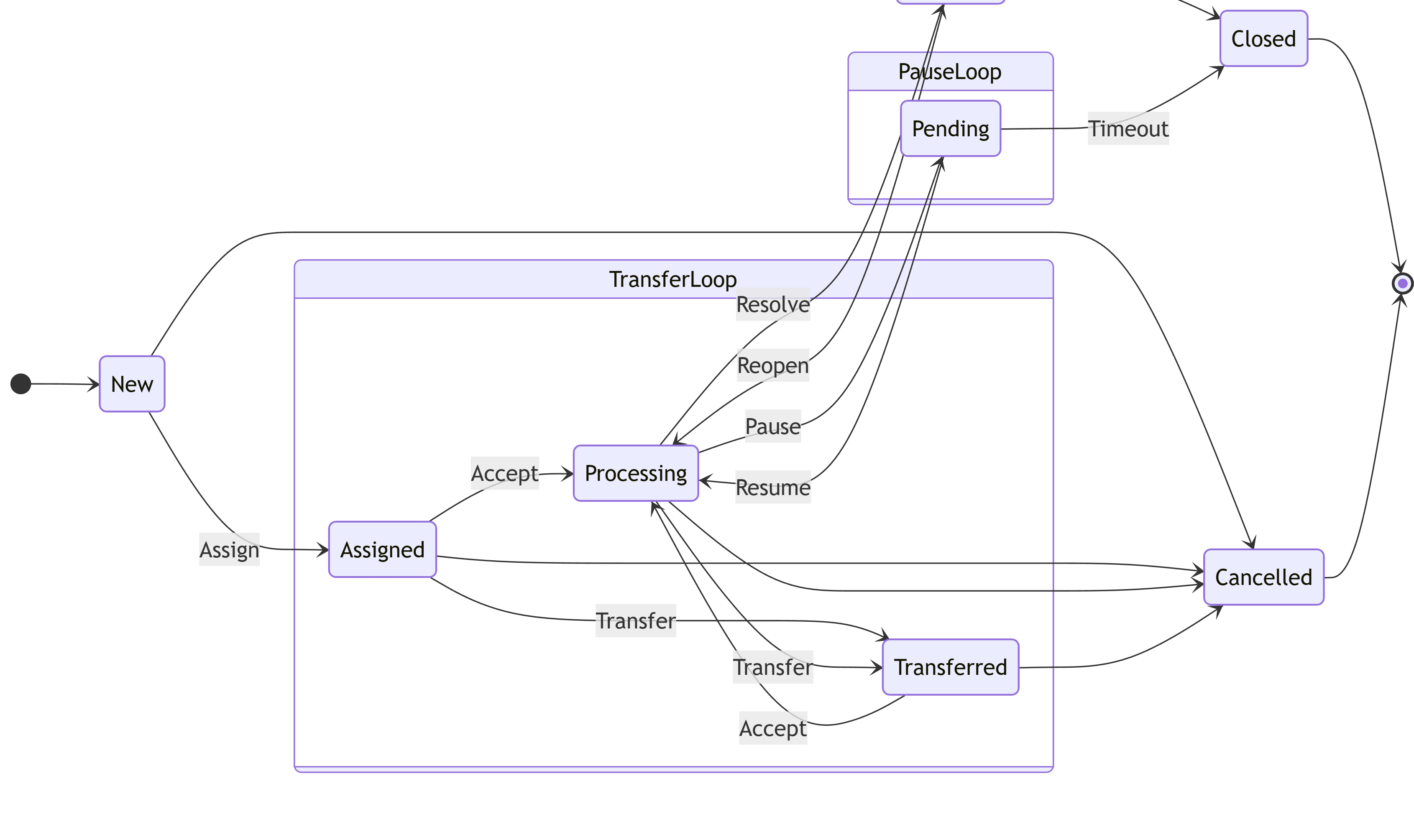
3.3 Key Status Transition Rules
4. SLA Service Level Management
4.1 Priority and SLA Configuration
4.2 SLA Calculation Logic
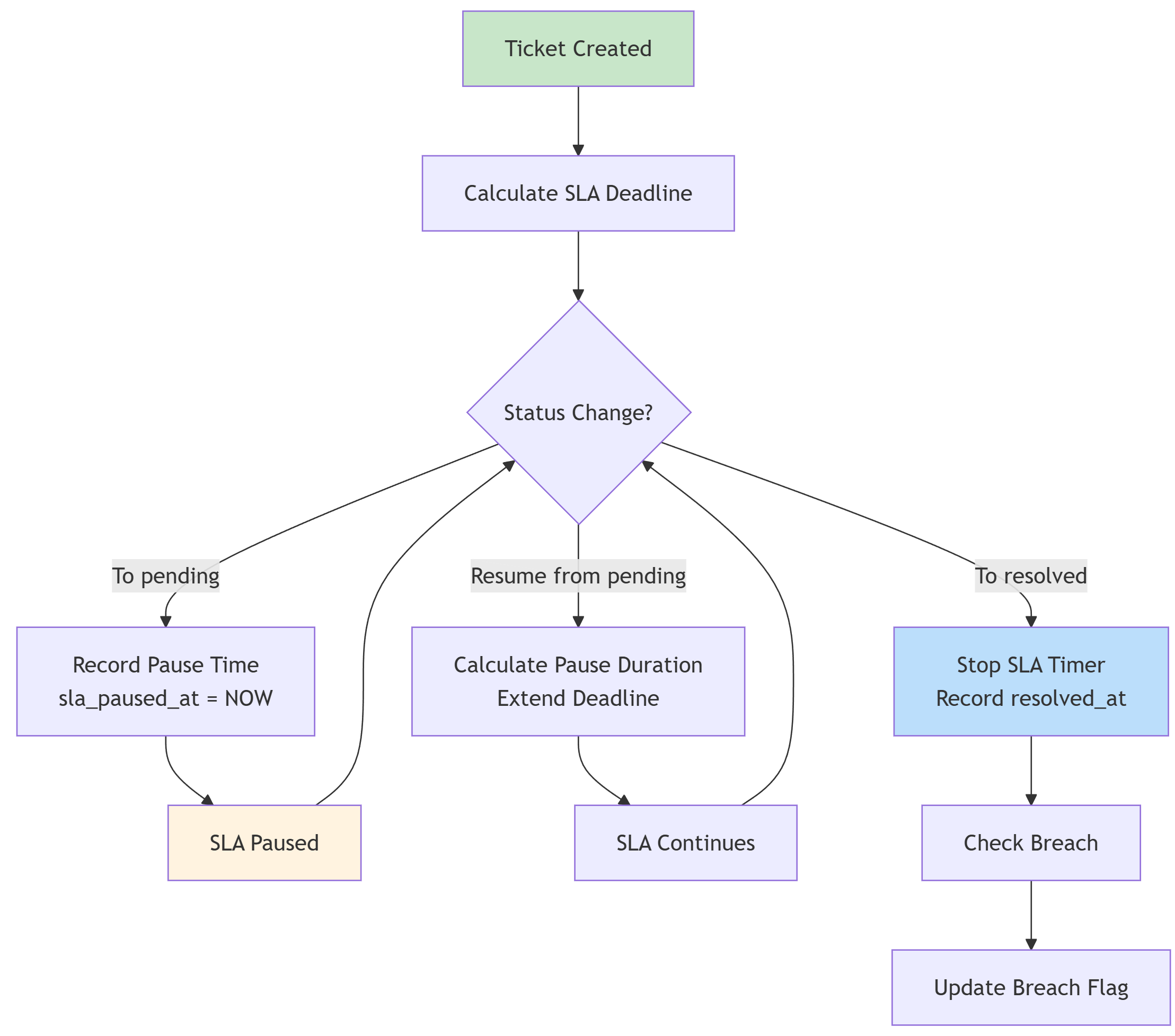
On Ticket Creation
On Pause (pending)
On Resume (from pending to processing)
SLA Breach Determination
4.3 SLA Alert Mechanism
4.4 SLA Dashboard Metrics
5. AI Capabilities and Employee System
5.1 AI Employee Team
The system configures 8 AI employees in two categories:
New Employees (Ticketing System Specific)
Reused Employees (General Capabilities)
5.2 AI Task List
Each AI employee is configured with 4 specific tasks:
Sam's Tasks
Grace's Tasks
Max's Tasks
Lexi's Tasks
5.3 AI Employees and Ticket Lifecycle
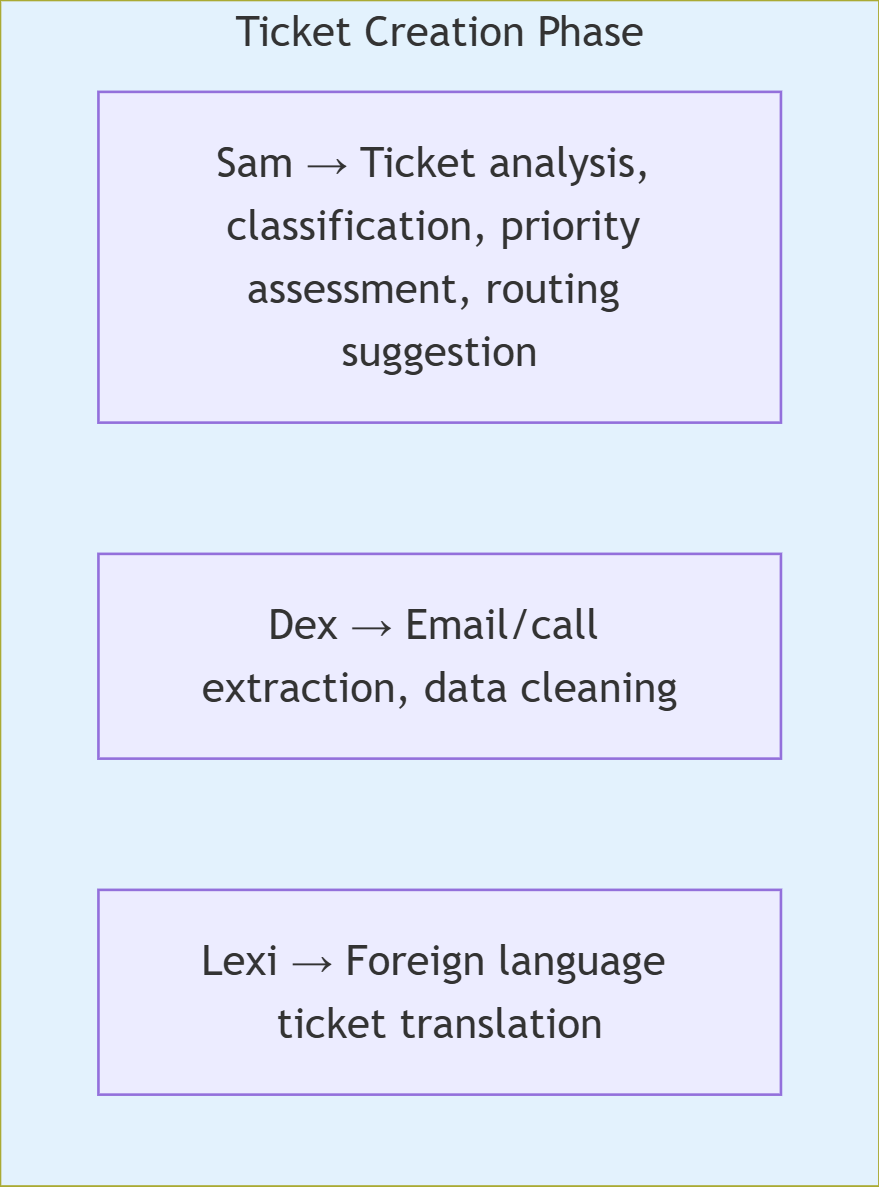
5.4 AI Response Examples
SAM-01 Ticket Analysis Response
GRACE-01 Reply Generation Response
5.5 AI EQ Firewall
Grace's reply quality review blocks the following issues:
6. Knowledge Base System
6.1 Knowledge Sources
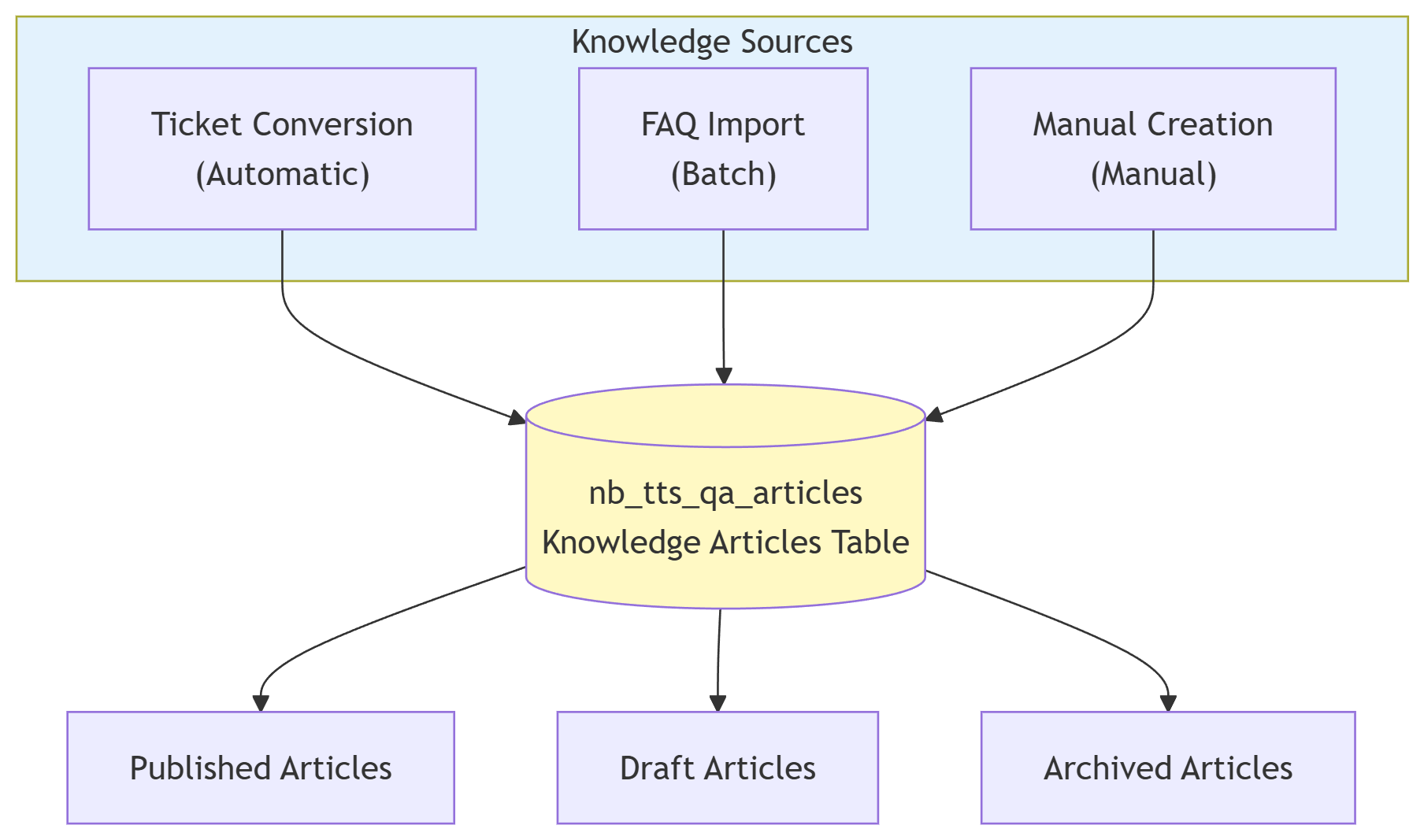
6.2 Ticket-to-Knowledge Flow
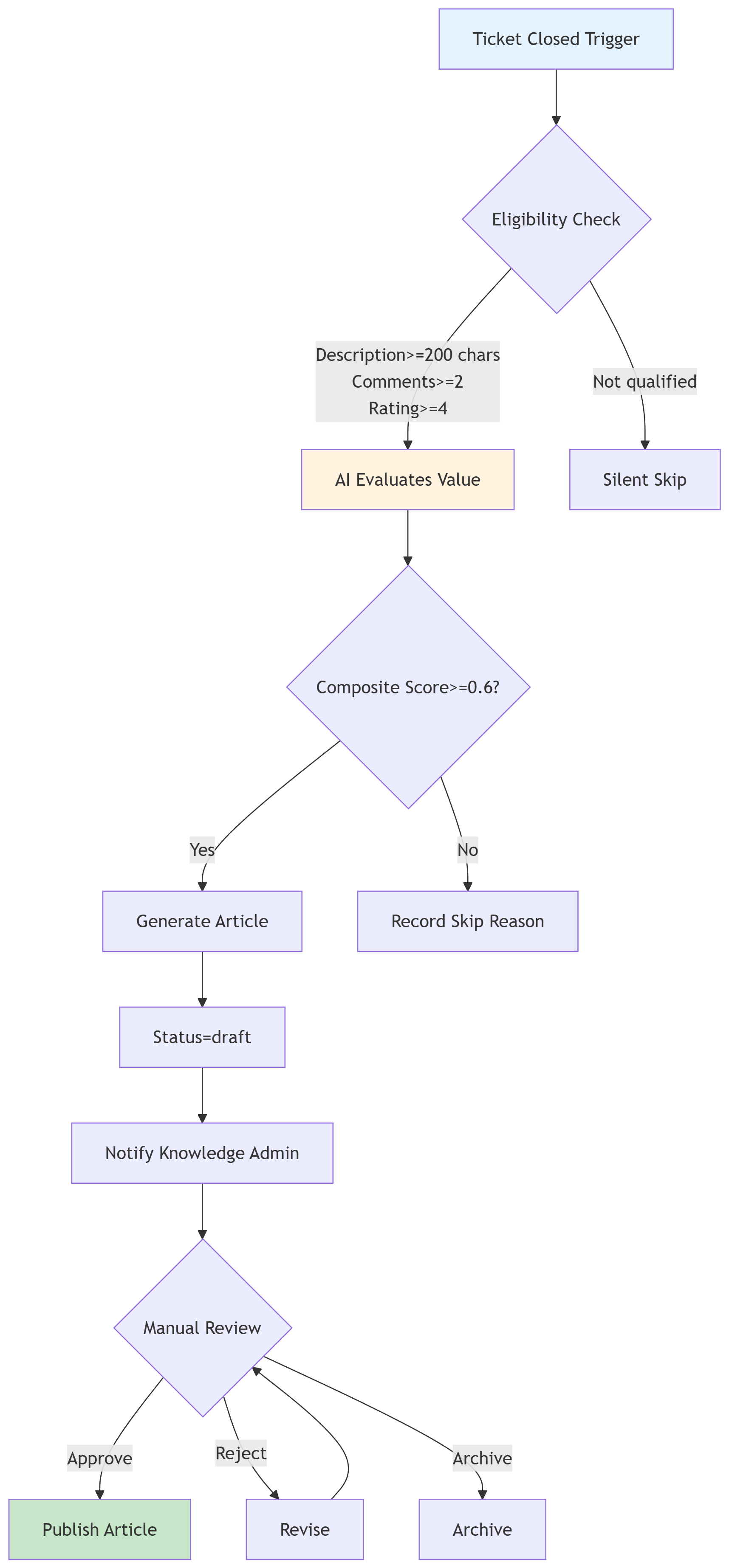
Evaluation Dimensions:
- Generality: Is this a common problem?
- Completeness: Is the solution clear and complete?
- Reproducibility: Are the steps reusable?
6.3 Knowledge Recommendation Mechanism
When an agent opens ticket details, Max automatically recommends related knowledge:
6.4 Knowledge Base Health Metrics
7. Workflow Engine
7.1 Workflow Categories
7.2 Core Workflows
WF-T01: Ticket Creation Flow

WF-AI01: Ticket AI Analysis
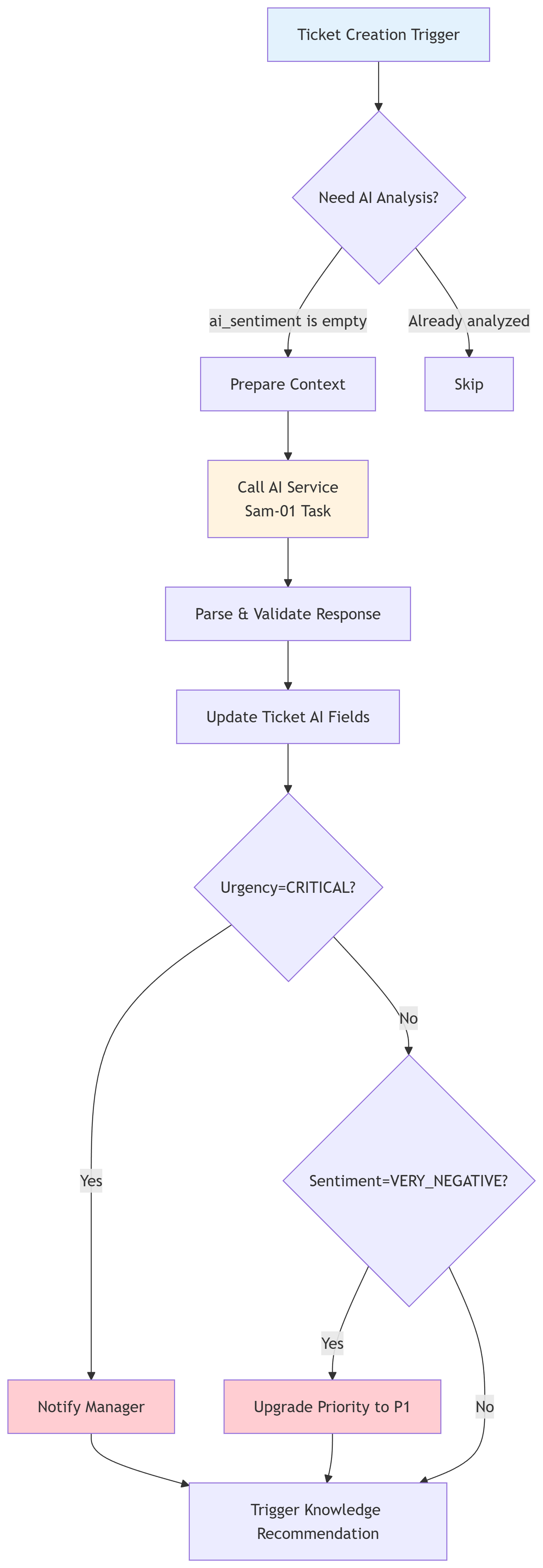
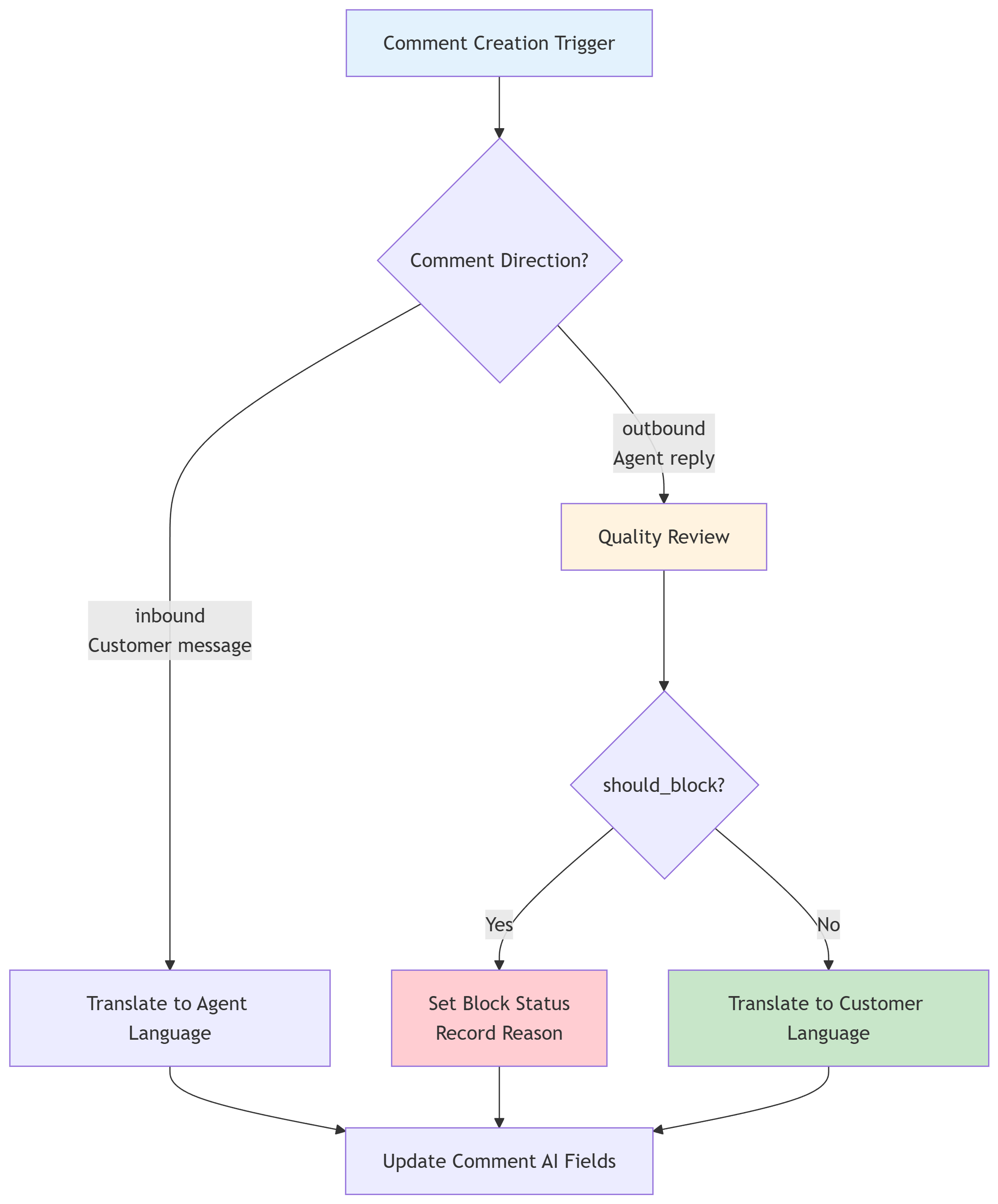
WF-AI04: Comment Translation & Review
WF-AI03: Knowledge Generation

7.3 Scheduled Tasks
8. Menu and Interface Design
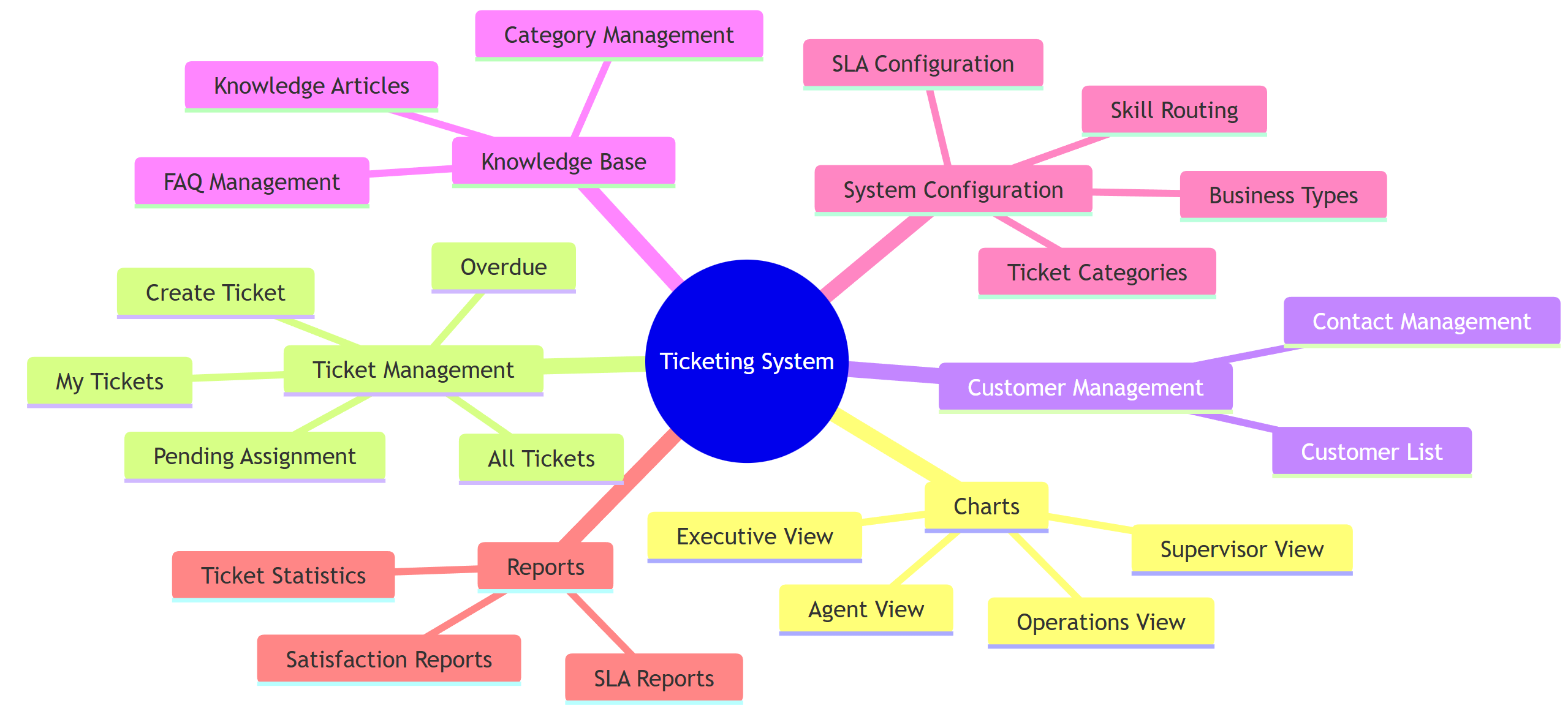
8.1 Backend Admin
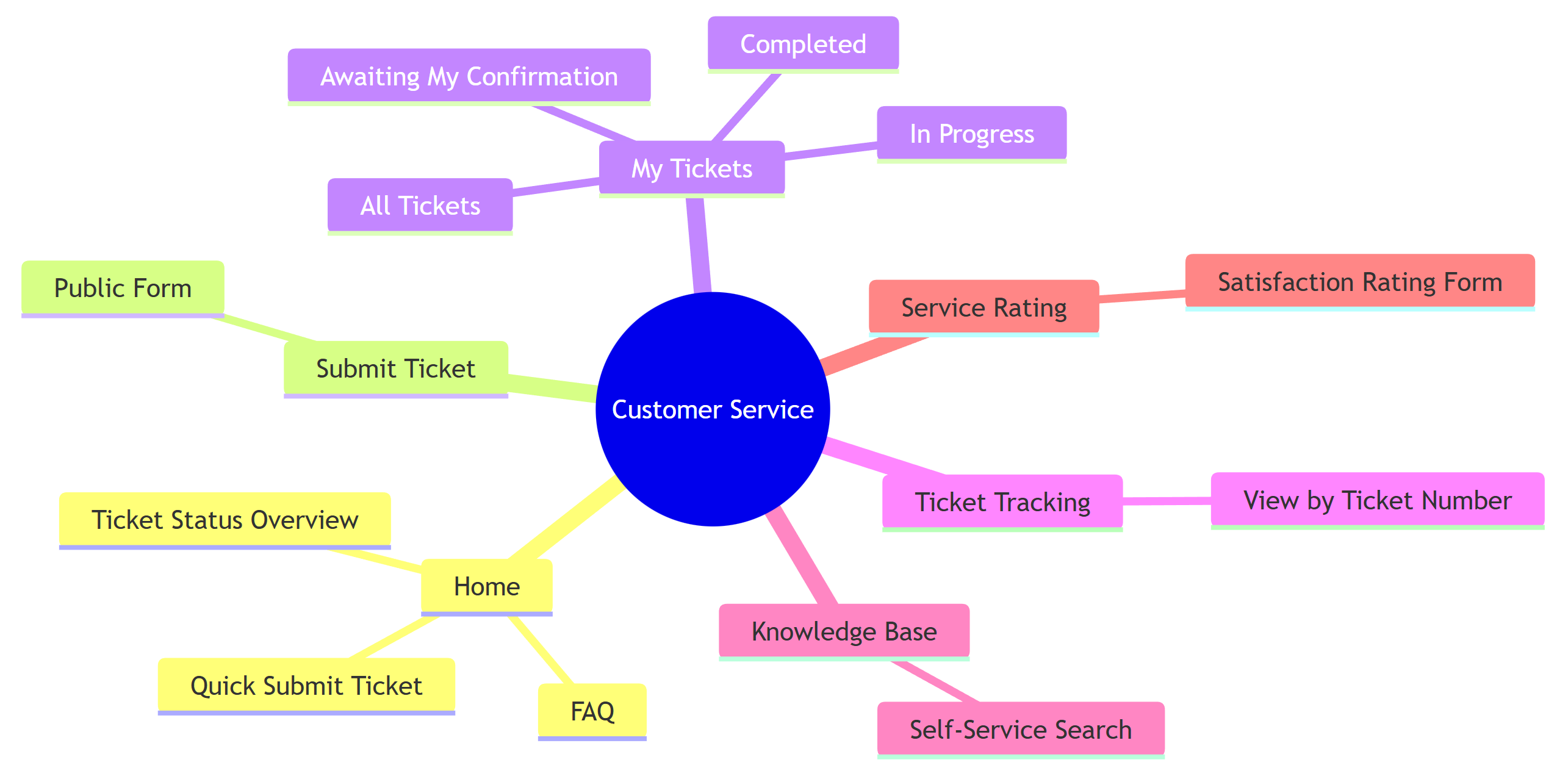
8.2 Customer Portal
8.3 Dashboard Design
Executive View
Supervisor View
Agent View
Appendix
A. Business Type Configuration
B. Category Codes
Document Version: 2.0 | Last Updated: 2026-01-05