

Overview
Data modeling is a key part of database design. It analyzes and abstracts real-world data and the relationships between it, then describes those relationships as a data model for an information system. NocoBase is data-model driven and provides the following capabilities.
Connect data from different sources
NocoBase data sources can be common databases, API or SDK platforms, and files.
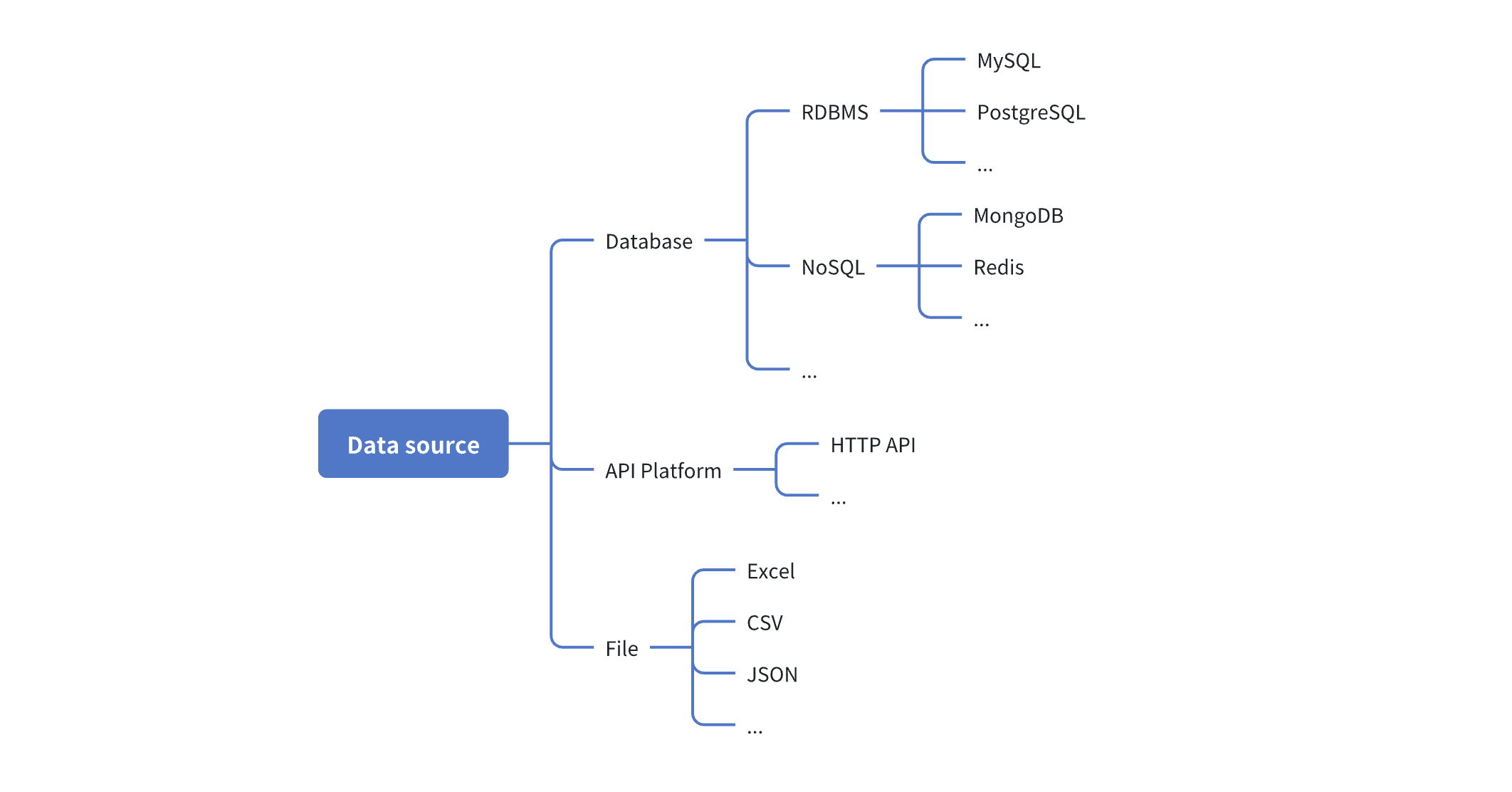
NocoBase provides the Data Source Manager to manage data sources and their collections. The manager provides the interface for managing all data sources; it does not connect to a source by itself. Use it together with the applicable data-source plugin.
Supported data sources include:
- Main data source: The NocoBase main database. It supports PostgreSQL, MySQL, MariaDB, KingbaseES, and OceanBase.
- External PostgreSQL: Connect an existing PostgreSQL database.
- External MySQL: Connect an existing MySQL database.
- External MariaDB: Connect an existing MariaDB database.
- External MSSQL: Connect an existing SQL Server database.
- External KingbaseES: Connect an existing KingbaseES database.
- External OceanBase: Connect an existing OceanBase database.
- External Oracle: Connect an existing Oracle database.
- External ClickHouse: Connect an existing ClickHouse database.
- External Doris: Connect an existing Doris database.
- REST API data source: Map a third-party system's REST API to a data source.
- External NocoBase data source: Connect collections from another NocoBase application.
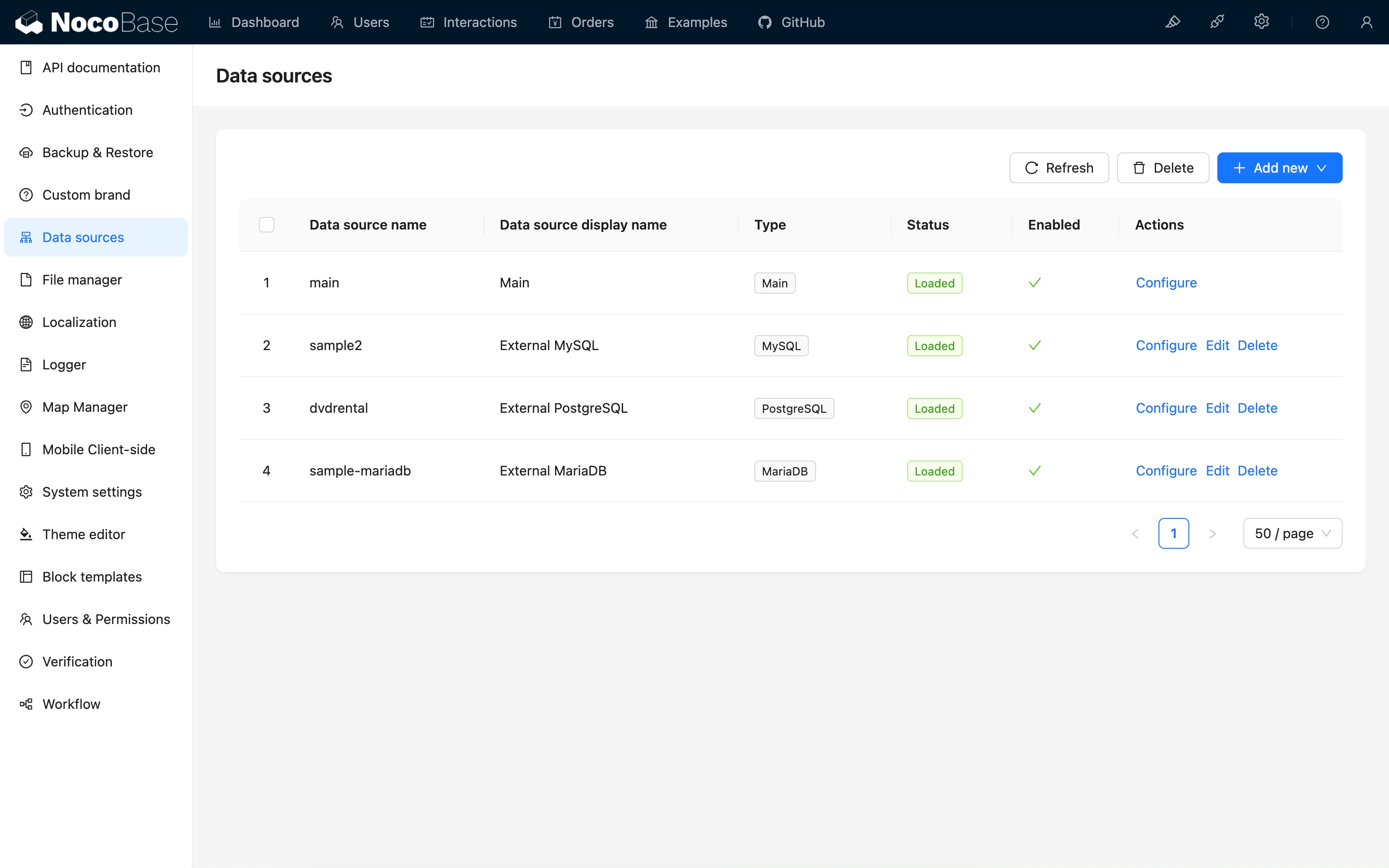
Data-modeling tools
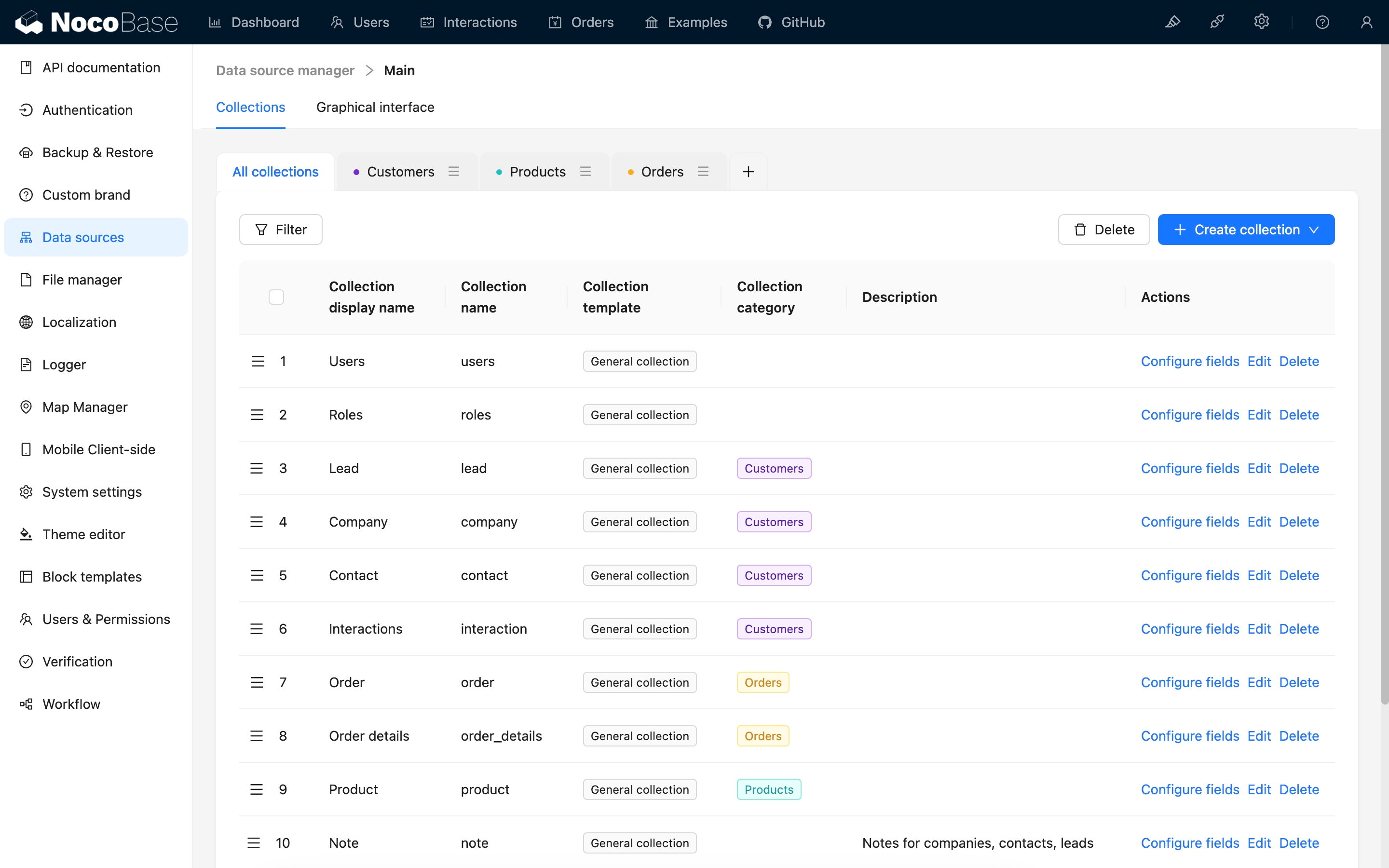
A simple collection management interface lets you create different data models (collections) or connect existing ones.
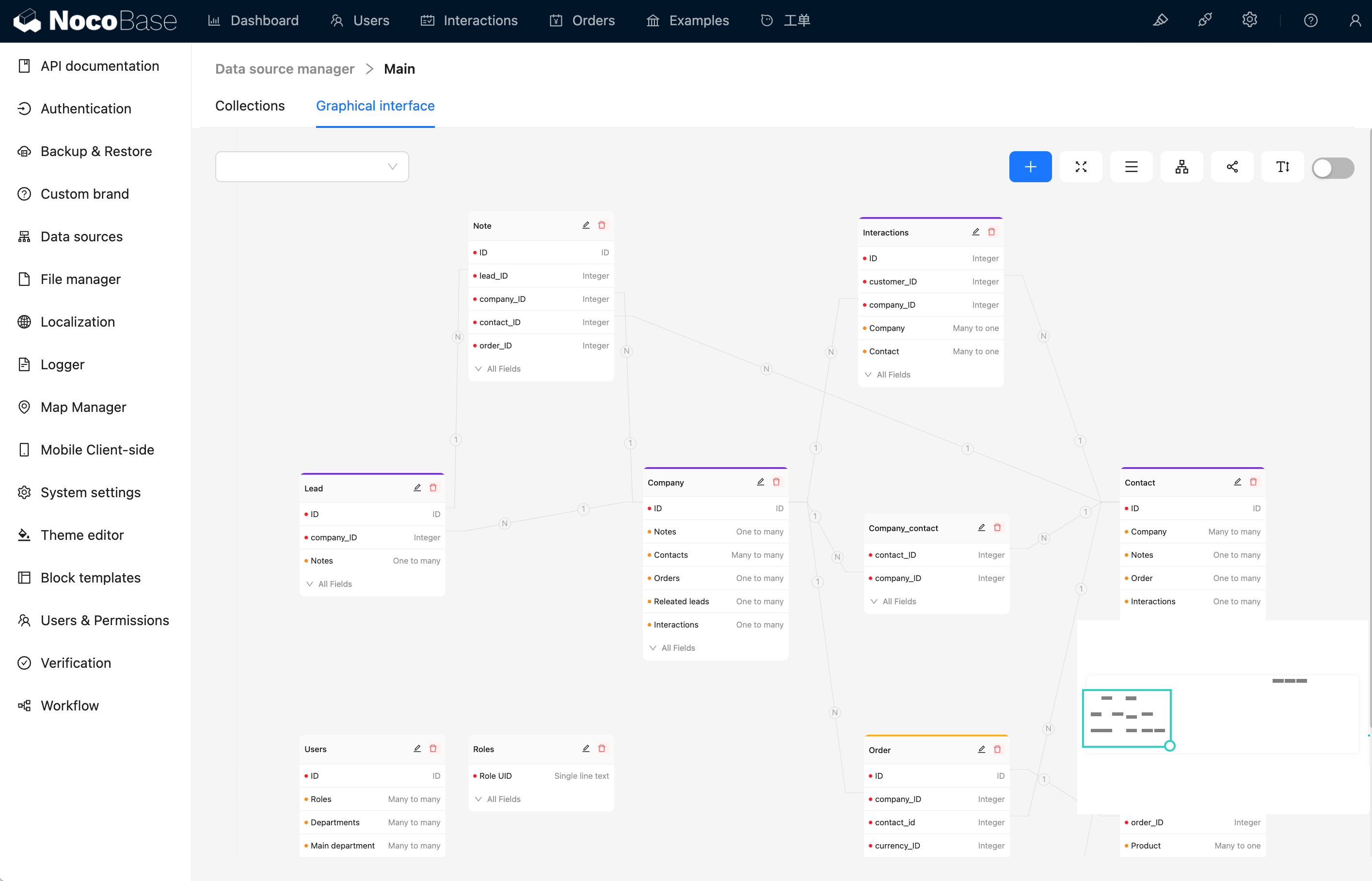
An ER-diagram-like visual interface helps extract entities and their relationships from user and business requirements. It gives you a direct way to describe the data model and understand the main data entities in a system and how they are connected.
Create different collection types
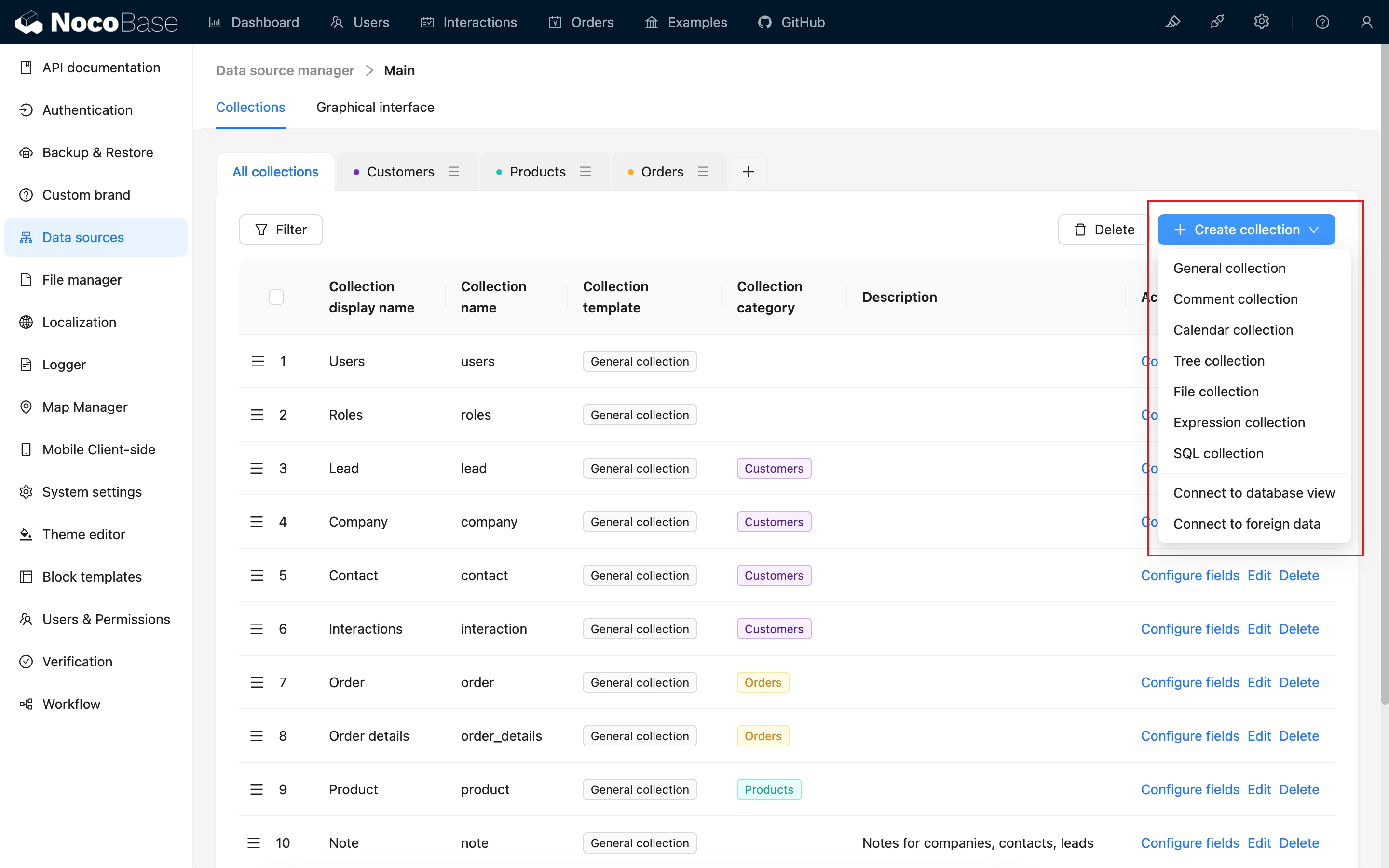
For more information, see Collections.
Rich field types
NocoBase provides a range of field types for different business data and interface requirements.
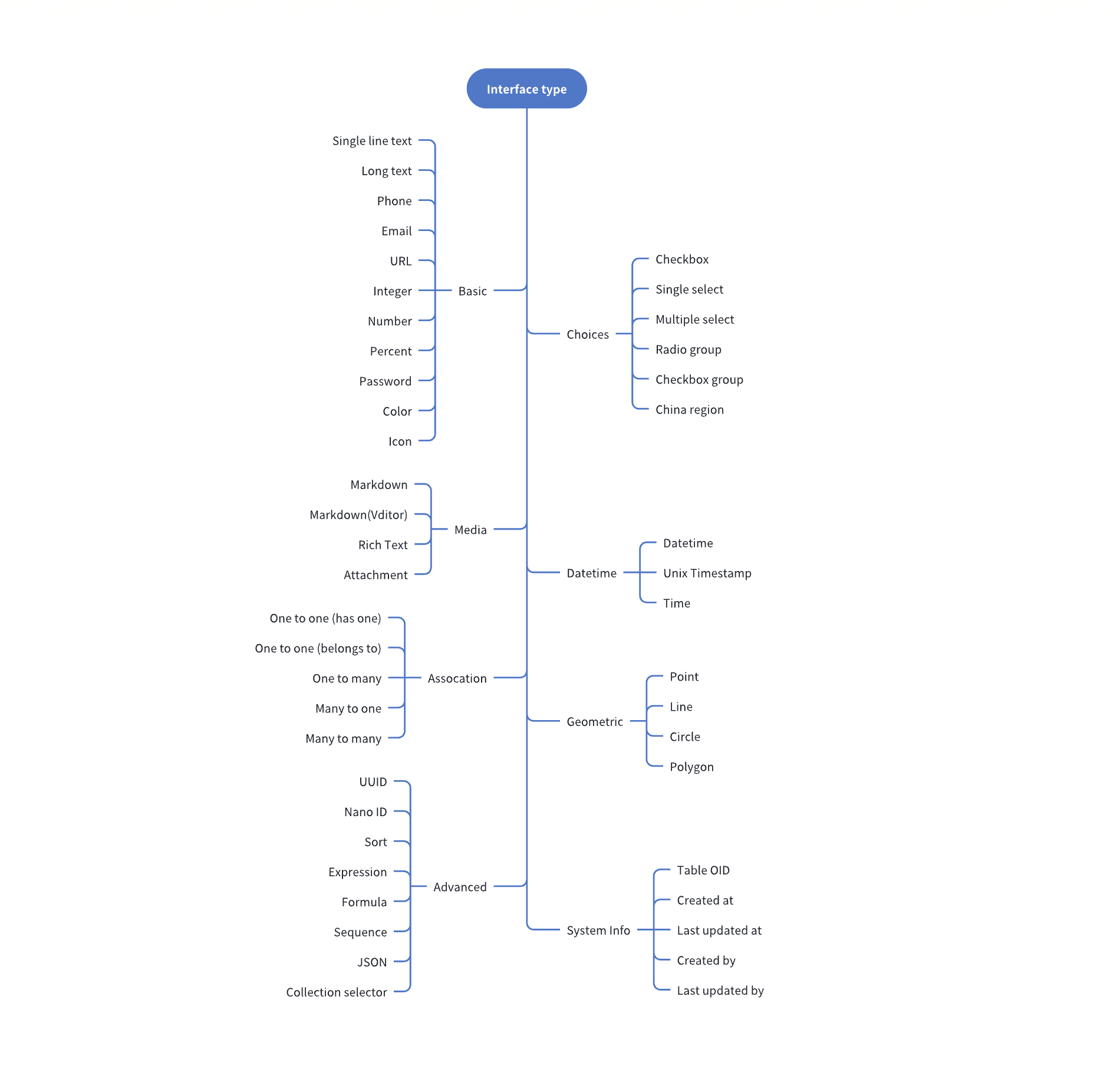
For more information, see Collection fields.